01 · Strategy & sitemap
We map your customer journeys, define the 3–5 pages that actually convert, and lock a sitemap and content brief before a single pixel is drawn.
Custom websites — not templates — that load fast, rank well and turn casual visitors into actual leads. Built for tradies, NDIS providers, professional services and ambitious small businesses.
See how DSIGNS approaches business websites that present the brand clearly, work across devices and help drive enquiries.
Watch on YouTubeTell us what you need — your trade, your suburb, your goal — and we'll point you straight to the right page.

Powered by on-page AI — instant answers, no waiting.
We've shipped 500+ websites since 2013 across WordPress, Shopify, Webflow and modern React stacks. Every site is built mobile-first, tested on real devices, and audited against Core Web Vitals before launch. Our build process bakes in schema, semantic HTML and accessibility (WCAG 2.1 AA targets) so the SEO team isn't fixing the developer's mess six months later.
We map your customer journeys, define the 3–5 pages that actually convert, and lock a sitemap and content brief before a single pixel is drawn.
Mobile-first, custom design in Figma — homepage and one inner page first, so we agree on the look before we scale it across the site.
Built on WordPress, Shopify or React (your call). We load real copy and images, not lorem ipsum, so you see the real thing in staging.
We launch with redirects, GA4 + conversion tracking and a 30-min CMS training call — then 30 days of free fixes and tweaks. Optional care plans cover hosting, security and ongoing edits after that.
A pretty site that nobody finds is a brochure on a hard drive. We pair every web build with the SEO, ads and CRM plumbing that turn it into a lead engine.

On-page SEO is baked into every build. Want to rank suburb-by-suburb across Sydney? Our SEO team takes it from there.

Don't wait six months for SEO to compound. Search + Performance Max campaigns turn the new site into booked jobs from week one.

Plain-English playbook for NDIS providers building a compliant, accessible site that actually wins participant enquiries.
A practical breakdown of how we approach web design projects, what decisions matter, and what clients should understand before starting.
We've audited well over a thousand small-business sites across Sydney since 2013, and the same pattern shows up almost every time. The site looks fine. The owner is mildly proud of it. And yet, when we open Google Search Console and GA4 side by side, three things are usually true:
None of that is the owner's fault. It's the natural outcome of buying a "$990 website" or letting a relative's mate "do something on Wix." Web design in 2024–2025 is a different craft to what it was in 2017, and the gap between a template and a properly built site has widened sharply.
This page is the long version of how we think about it — what we ship, what we charge, and where we draw the line.
A website is not a brochure. It's three things stitched together — a sales asset, an SEO asset, and a customer-service asset — and if any one of those three is weak, the whole thing punches below its weight. Here's how we frame each project:
Before we open Figma, we sit down for a 60–90 minute working session with the owner (and ideally one salesperson) and pull apart who the site is actually for. Sydney service businesses almost always have two or three distinct audiences — a homeowner, a property manager, a referrer — and treating them as one audience is the single most common reason a homepage doesn't convert.
We then map a sitemap that has one job per page. Service pages do one thing. Suburb pages do one thing. The "about" page does one thing. If you can't summarise a page in one sentence, it isn't a page yet.
The body copy on a converting service site is around 14–17px on desktop and 16–18px on mobile (the Nielsen Norman Group's body-text research is worth reading if you want the data). Line length sits between 55 and 75 characters. Headlines are short, contrast is real, and the hero image is something a human took, not a stock library cliché of "diverse team smiling at laptop."
We design mobile-first because, depending on industry, 62–84% of Sydney small-business traffic is mobile. You don't get to design for desktop and "make it responsive."
We test every build on a budget Android (a Samsung A14, ~$300 retail) over a throttled 4G connection. Not on a MacBook over fibre. The difference is brutal. A homepage that loads in 1.4 seconds on a MacBook can take 6.8 seconds on an A14 in Penrith on a Tuesday afternoon. That difference is often 30–50% of your bounce rate.
Specifically, every site we ship hits these targets:
| Metric | Target | Why it matters |
|---|---|---|
| LCP (Largest Contentful Paint) | < 2.5s | Direct ranking signal; below this, bounce rate climbs sharply |
| INP (Interaction to Next Paint) | < 200ms | Replaced FID in 2024; measures real interactivity |
| CLS (Cumulative Layout Shift) | < 0.1 | Layout jumps annoy users and hurt conversions |
| Total page weight | < 1.5MB | Bigger pages punish 4G users in outer suburbs |
These aren't aspirational. If your current site doesn't hit them, you can verify in 30 seconds at PageSpeed Insights.
Most agencies hand a finished site to "an SEO person" three months after launch. That's why most sites have hidden technical debt — H1s on every section, broken canonical tags, a sitemap.xml that nobody updates, and schema markup that's either missing or wrong.
We bake all of it in during the build:
Pair the build with our SEO service and you're not paying anyone to fix the developer's mess six months later — because there isn't one.
Phone number top-right, sticky on mobile. A click-to-call button in the hero on mobile. A short intake form, not a 14-field interrogation. SMS auto-reply within 60 seconds of a form submission via our small business CRM. A "what happens next" section after the form so the lead doesn't ghost. Real photos of real staff. Real Google reviews above the fold, pulled live from your Google Business Profile.
Every one of those is worth 0.5–2 percentage points of conversion rate. Stack five of them and a 1.4% site becomes a 6% site without changing the design at all.
We get asked "how much for a website?" more than any other question. The honest answer depends on five variables: page count, custom design vs template, functionality (brochure vs eCommerce vs booking system), content (you supply it vs we write it), and integrations.
That said, here's where real Sydney small-business projects land in our studio:
| Project | Pages | Investment (ex GST) | Timeline |
|---|---|---|---|
| Solo trade or freelancer | 5–7 | $4,000–$6,490 | 3–5 weeks |
| Small service business | 8–12 | $6,490–$10,990 | 5–7 weeks |
| Established SMB (suburb pages, blog) | 15–25 | $10,990–$18,990 | 7–10 weeks |
| Multi-service or NDIS provider | 25–60 | $18,990–$38,000 | 10–14 weeks |
| Shopify starter (10–30 SKUs) | n/a | $6,490–$12,990 | 5–8 weeks |
| Shopify scaled (100–500 SKUs) | n/a | $12,990–$28,000 | 8–12 weeks |
If a Sydney agency quotes you $990 for a "professional website," you're getting a template you could buy yourself for $59, dropped onto cheap shared hosting, with no SEO foundations. We've rebuilt dozens of those — it's almost always cheaper to do it right the first time.
There's no single right answer. There's a right answer for your business. We've shipped on all four and we'll recommend honestly:
For a typical 8-page small-business site (~6 weeks):
We work in plain-English sprints with a weekly 20-minute check-in. No project-management theatre, no Asana boards you'll never log into.
"Can't I just use Wix or Squarespace?" You can, and for a side project under 5 pages you probably should. The trade-off is platform lock-in, slower load times on mobile, harder SEO control, and a ceiling you'll hit at around $300k–$500k of revenue when the site stops keeping up. We rebuild ~40 Wix and Squarespace sites a year.
"Do you outsource overseas?" No. Every line of code, every pixel and every word is built by our Sydney team. Our daily stand-up is in person in Norwest, NSW. We're happy to put you on Zoom with the actual designer or developer working on your build.
"What about ongoing care?" Every site comes with 30 days of free fixes after launch. After that, our care plans run $79–$290/month depending on whether you want hosting, security, content edits, or all three. No lock-in, you can cancel anytime.
"Will my old SEO survive a rebuild?" If we run the project. We map every old URL to a new URL, set up 301 redirects, preserve your Search Console data, and watch organic traffic for 60 days post-launch. Most rebuilds we run gain organic traffic within 90 days because the foundations are stronger.
If you've read this far, the next sensible step is a 30-minute call. Bring your current site, your top three competitors and a rough budget. We'll tell you exactly what we'd do, what we wouldn't, and a realistic price — no obligation. Book a scoping call.
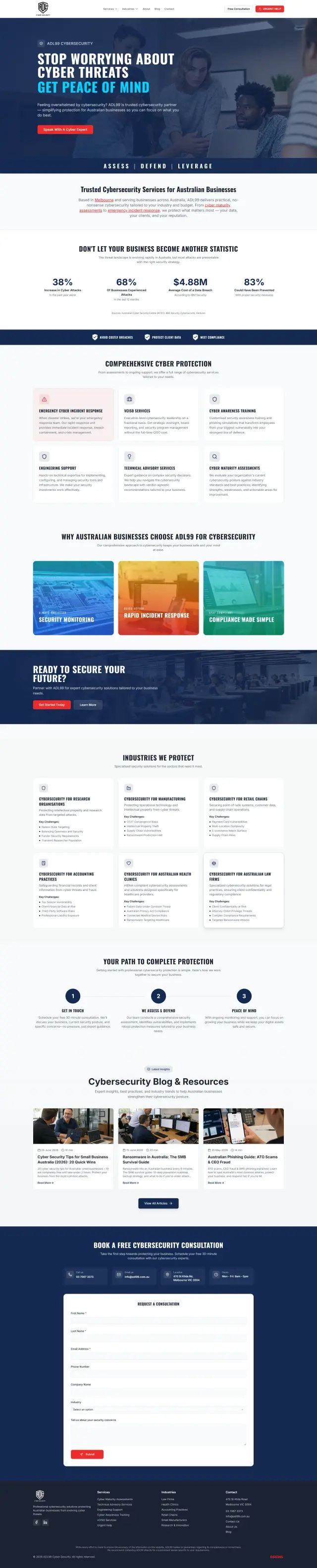
Cybersecurity firm providing defensive technology solutions to protect organizations against digital threats and attacks.
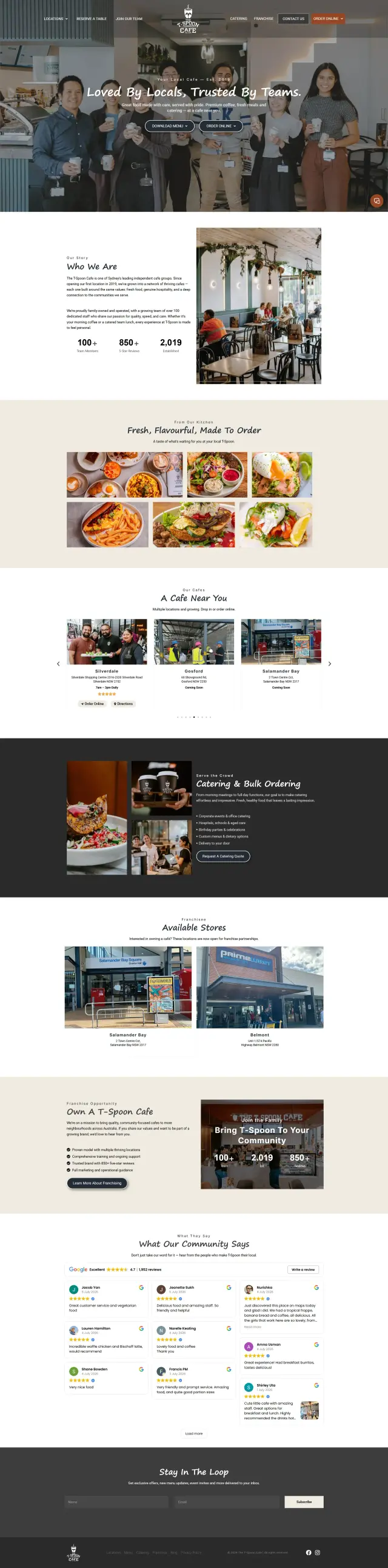
Modern cafe website with online ordering and beautiful design showcasing menu items.
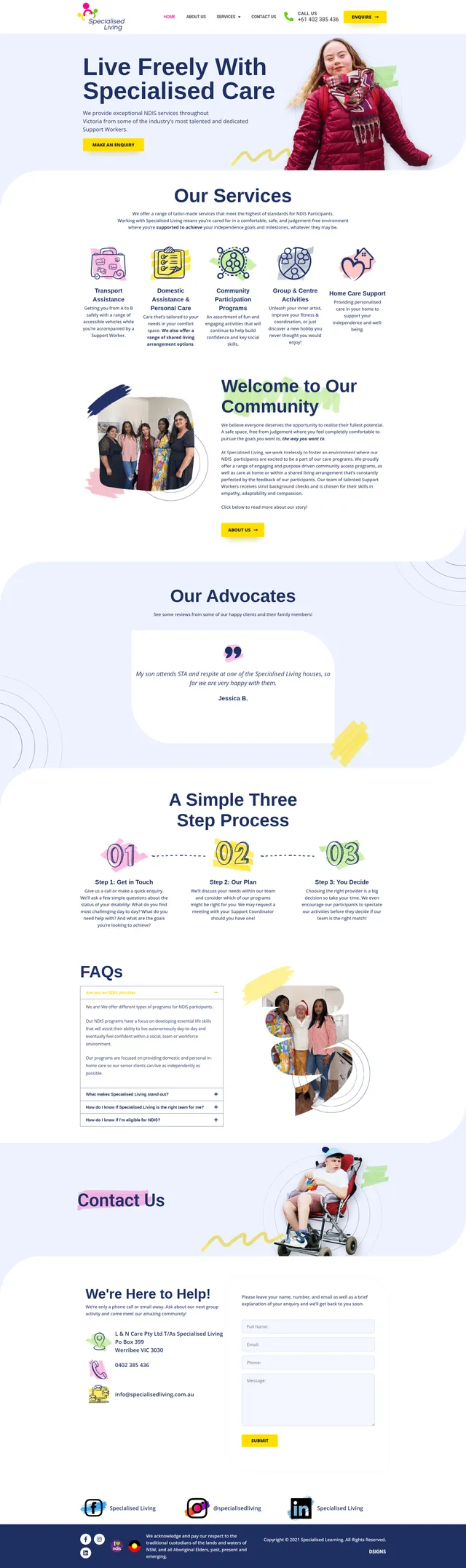
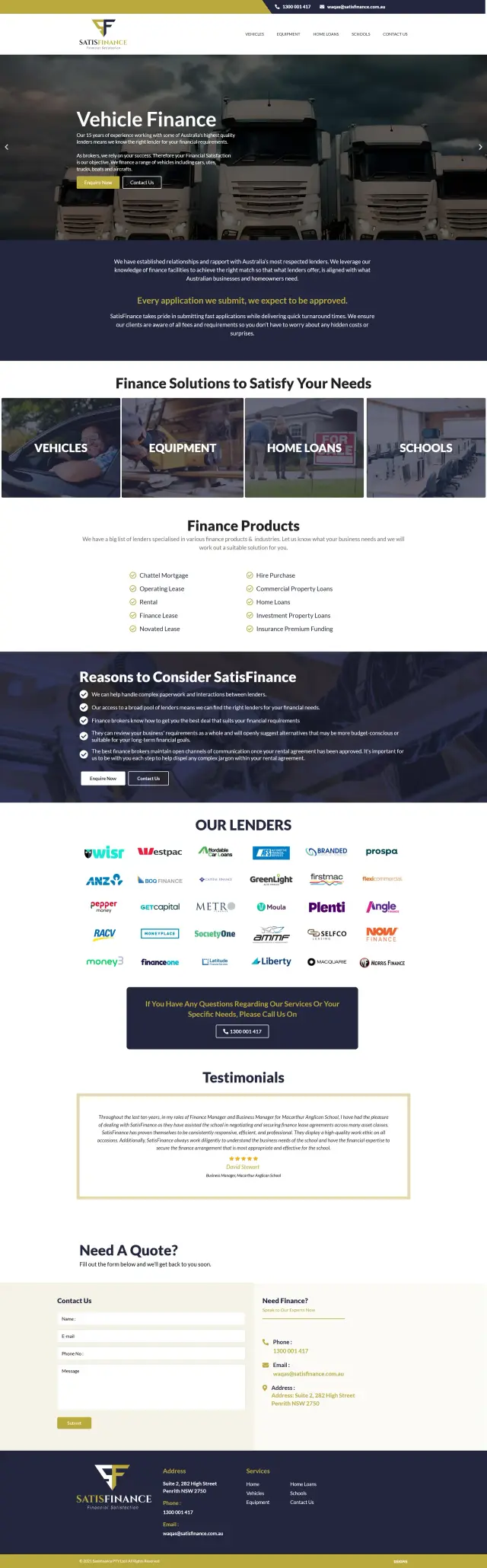
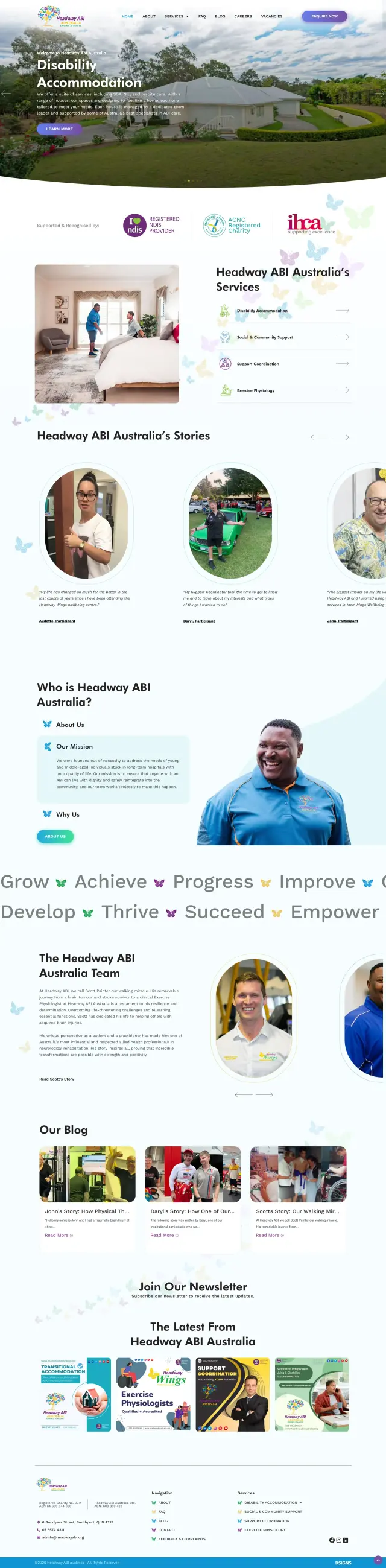
Leading NDIS provider offering comprehensive disability support services including full-service digital marketing, branding, website, SEO, and advertising.
Real project work, clear briefs and practical outcomes — without fake before-and-after claims.


See what clients say about our branding, web design, SEO, Google Ads and digital marketing work.
Every website is scoped to your goals, content and integrations after a short discovery call. You'll get a written plan and timeline before anything starts — no off-the-shelf estimates.
Most 5–8 page sites take 4–6 weeks. We work in plain-English sprints with weekly check-ins.
We build with technical SEO baked in — schema, fast Core Web Vitals, clean URLs. For active ranking, pair it with our SEO service.
Yes. You'll get a CMS and a 30-min training call. If you'd rather not, our care plans cover ongoing edits.
WordPress for content-led service businesses, Shopify if you sell physical product, React/Next.js for high-traffic or app-like sites. We'll recommend honestly based on your team and roadmap.
We can — managed hosting on Cloudflare or SiteGround through our care plans — or hand it to your IT team. No lock-in.
We build to WCAG 2.1 AA targets by default — semantic HTML, proper contrast, keyboard nav, alt text. Critical for NDIS, government and healthcare clients.
Yes. We migrate copy, images and blog posts, plus set up 301 redirects from old URLs so you don't lose Google rankings.